Vom Prompt zum Loop: Die Evolution der KI-Steuerung · Part 1 of 8
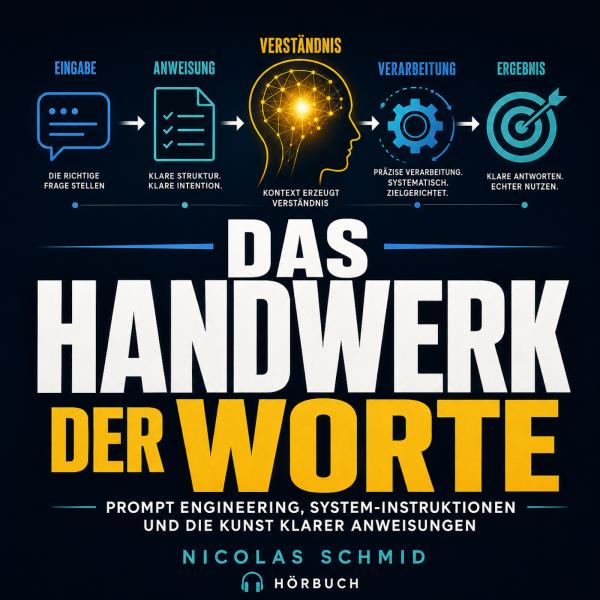
Das Handwerk der Worte
Prompt Engineering, System-Instruktionen und die Kunst klarer Anweisungen
Roles, few-shot examples, chain of thought and system instructions: prompting as a craft, not a guessing game.
Listen on
Preview on Spotify
About this audiobook
The quality of what an AI gives you depends on the thinking behind your instruction. Part 1 of the series replaces vague search-engine questions with controlled, effective work orders.
You learn to define roles and personas so the model has the right context, to structure complex tasks with few-shot prompting and chain of thought, and to write system instructions that make the AI deliver exactly what you need.
Published in German, 39 minutes. For anyone who wants to use AI tools deliberately, whether to speed up daily work or as a developer going deeper.
Chapters
- Einleitung: Das Handwerk der Worte – Dein Weg zur KI-Meisterschaft
- Das Fundament – Denkstrukturen, Rollen und Personas
- Die Werkstatt – Strukturierte Anweisungen und Beispiele in der Praxis
- Die Meisterschaft – System-Instruktionen und die Kunst der Kontrolle
- Abschluss: Deine neue Stimme im digitalen Raum
Want to apply this in your own business?
The audiobooks explain the ideas. In the Kickstart workshop your team builds its first tool in one day.
See the courseVom Prompt zum Loop: Die Evolution der KI-Steuerung
-
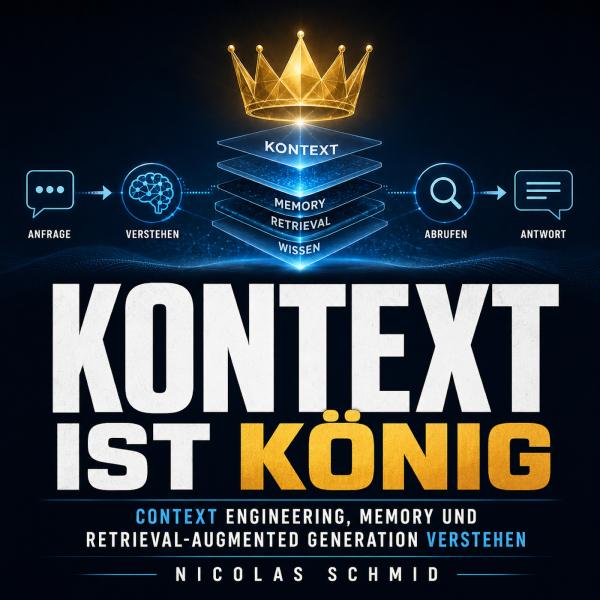 2. Kontext ist König
How to give a language model the right knowledge: context windows, memory and retrieval-augmented generation.
-
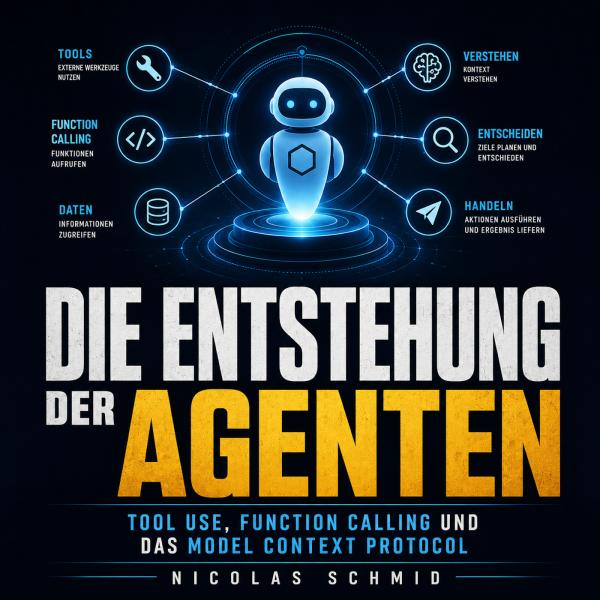 3. Die Entstehung der Agenten
From answering machine to actor: tool use, function calling, ReAct and the Model Context Protocol.
-
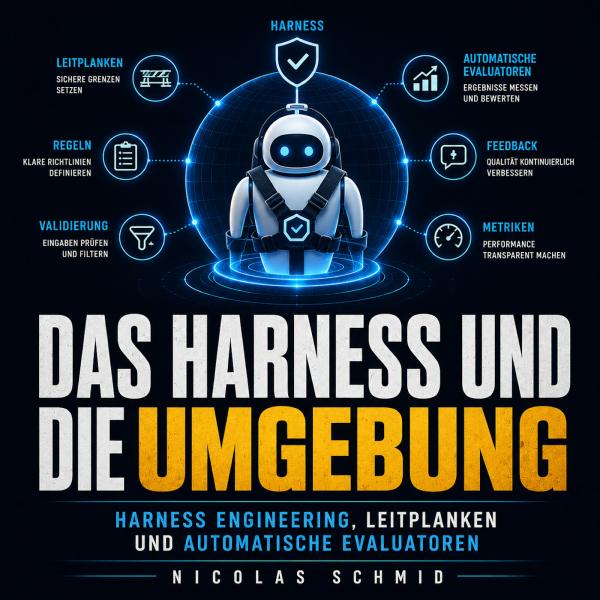 4. Das Harness und die Umgebung
The environment decides whether an agent is production-ready: guardrails, sandboxes and automatic evaluators.
-
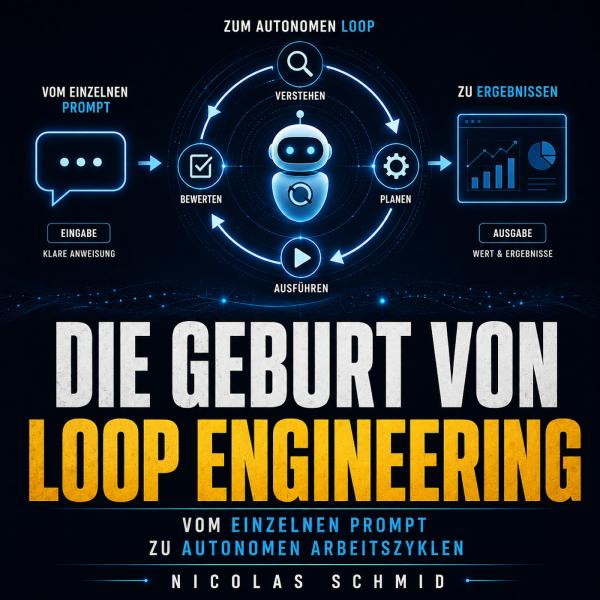 5. Die Geburt von Loop Engineering
Plan, execute, observe, refine: why autonomous work cycles beat single prompts on every long task.
-
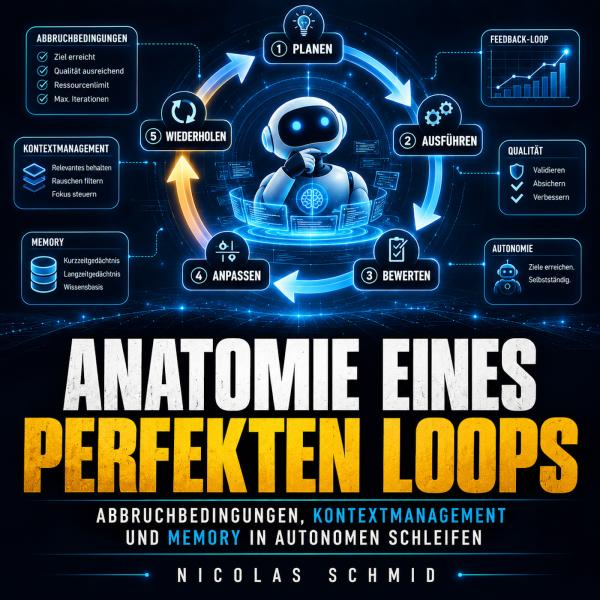 6. Anatomie eines perfekten Loops
Stop conditions, context rotation, memory and a human emergency stop: what keeps an autonomous loop safe.
-
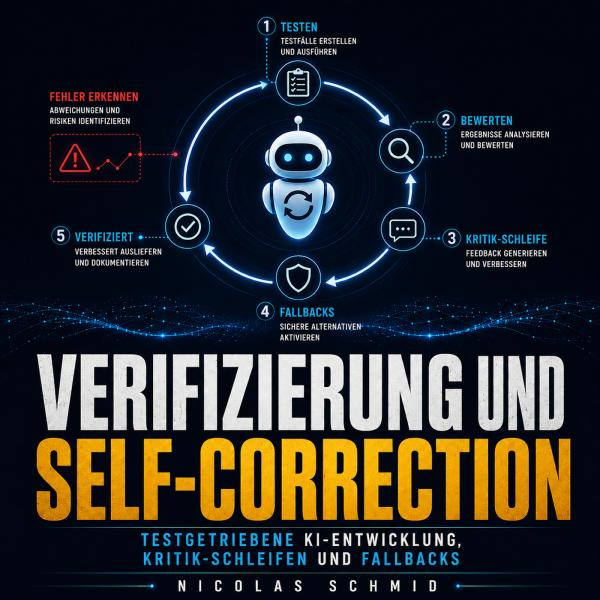 7. Verifizierung und Self-Correction
A model must not grade its own work: generator-evaluator loops, hard tests and fallbacks for AI you can trust.
-
 8. Das autonome Ökosystem
Teams of specialised agents, hierarchy versus swarm, and the human as architect, auditor and conductor.